The Great Dyke – Zimbabwe’s Stone Belt
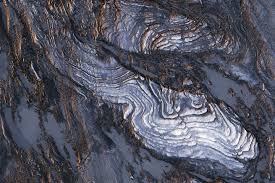
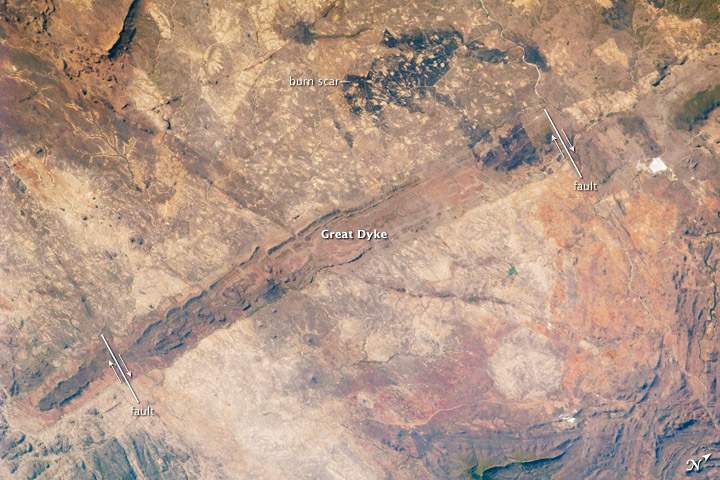
Zimbabwe sits directly over the Great Dyke, one of Earth’s oldest geological formations, dating back over 3 billion years. This 550-kilometer-long belt of horizontally layered igneous rock runs right through the heart of Zimbabwe. Packed with different types of mineral-rich rocks, metamorphosis over the course of 2.5 billion years created fascinating colors, patterns, and textures that have become synonymous with the nation’s artistic identity.
For artists, the true value lies in the diverse array of sculptural stones found within and around the Dyke. What sets Zimbabwe apart is the concentration and variety of carving stones available in a relatively small area. The country’s geological history and unique mineral heritage has created a perfect storm of conditions for stone formation and the harvesting of carving materials, resulting in an artist’s paradise akin to the Greek marble quarries.

Diversity of Stone
This geographic profile within Zimbabwe contributes a combination of factors that create highly versatile foundation for sculptors.
- Structural Integrity: Chromium and manganese content in serpentines increases durability
- Weather Resistance: Pre-weathered stones withstand thermal expansion/contraction
- Color Retention: Metallic oxides create permanent pigmentation that intensifies with polishing
- Workability: Layered structure allows both detailed carving and large-scale works
Modern sculptors will combine traditional stone selection methods with geological surveys to locate quality deposits. The most common being:
| Stone Type | Color Range | Rarity | Hardness (Mohs) |
| Serpentine | Yellow to black | Common | 2.5 – 5.5 |
| Lepidolite | Purple, lavender | Rare | 2.5 – 3.0 |
| Dolomite | Pink, white, grey | Common | 3.5 – 4.0 |
| Fruit Serpentine | Multicolored | Uncommon | 4.0 – 5.0 |
| Verdite | Green with gold | Very Rare | 5.5 – 6.0 |
| Opal Stone | Multicolored | Uncommon | 5.5 – 6.5 |
| Springstone | Black, brown | Common | 5.0 – 7.0 |
| Leopard Rock | Yellow and black | Rare | 6.0 – 7.0 |
A Sculpture’s Paradise
The primary carving material comes from this regions serpentine formations – Springstone, Opal Stone, Cobalt, Fruit Serpentine. While the stones’ varied hardness (Mohs 2-7) requires adapting techniques, from rasping soft steatite to diamond-tool carving of Springstone, it also offers artistical benefits. These are the 5 most popular stones that for local artists:


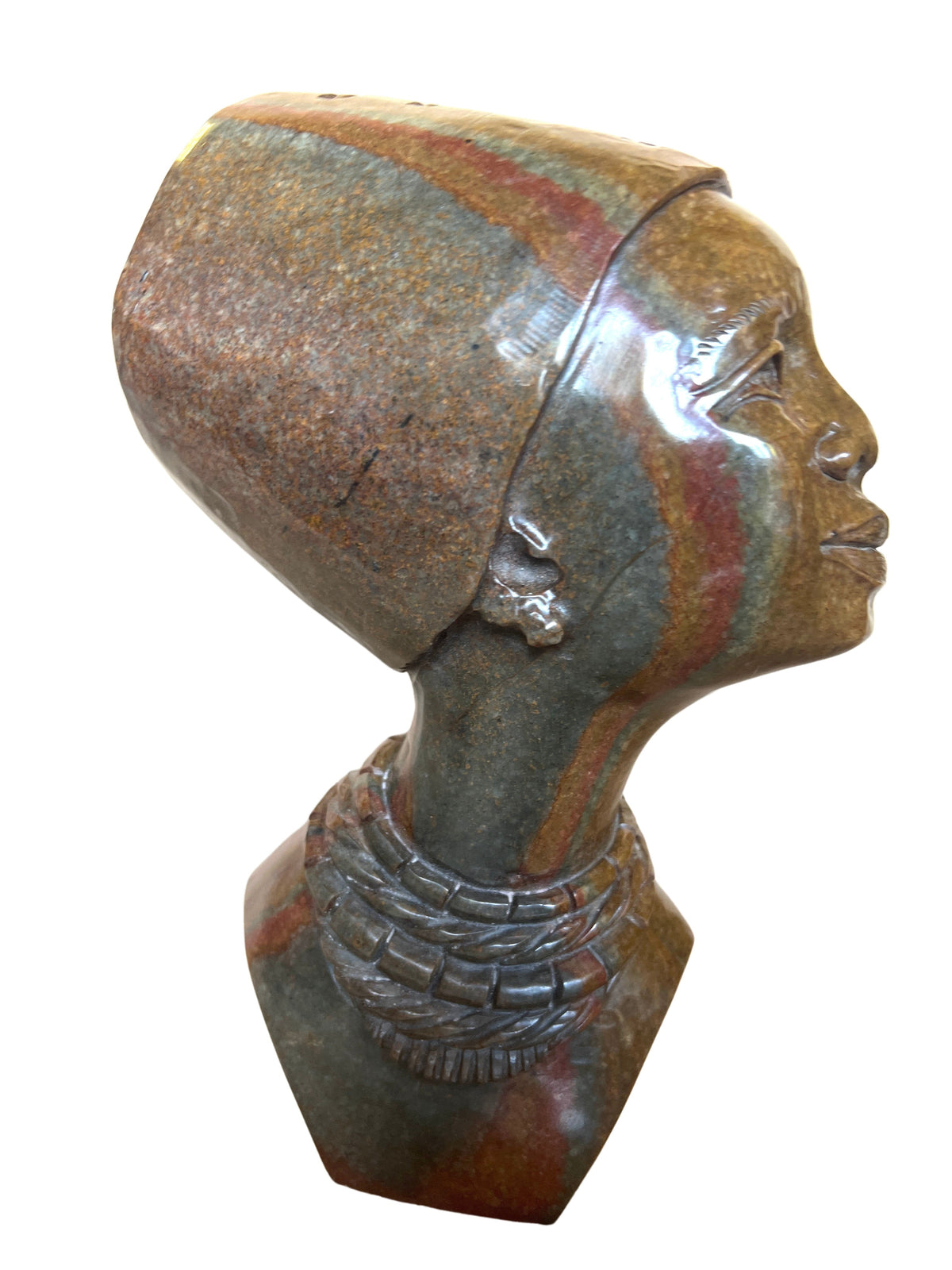
- Springstone
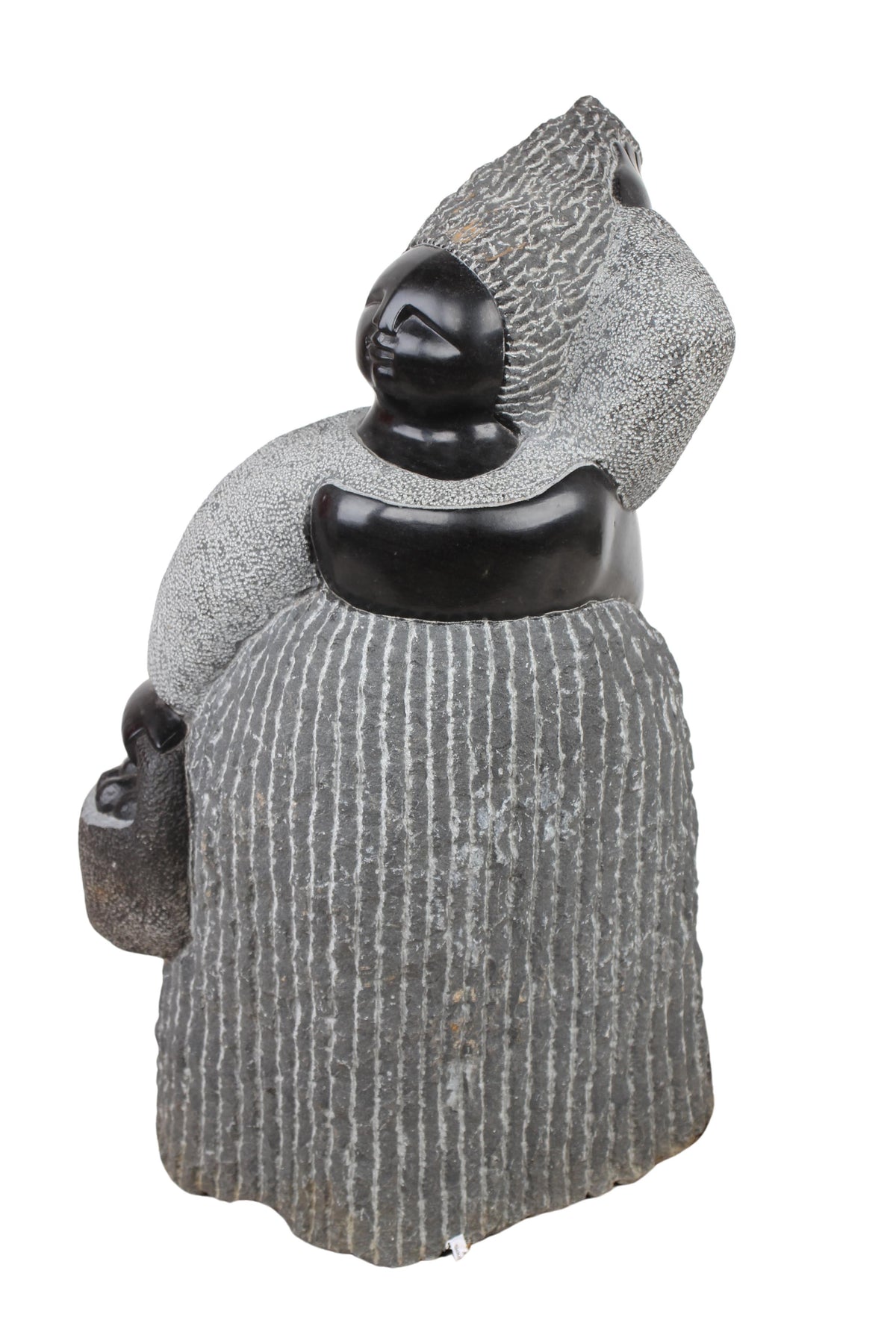
- The hardness and extremely fine grain of Springstone allows for intricate details without chipping while its iron-rich composition allows artists to achieve lustrous, mirror-like finishes resembling black opal. As these stones have already hardened over billions of years of African sun and rain (5-7 Mohs), Springstone sculptures are extremely durable for both indoor and outdoor use.
- Serpentine
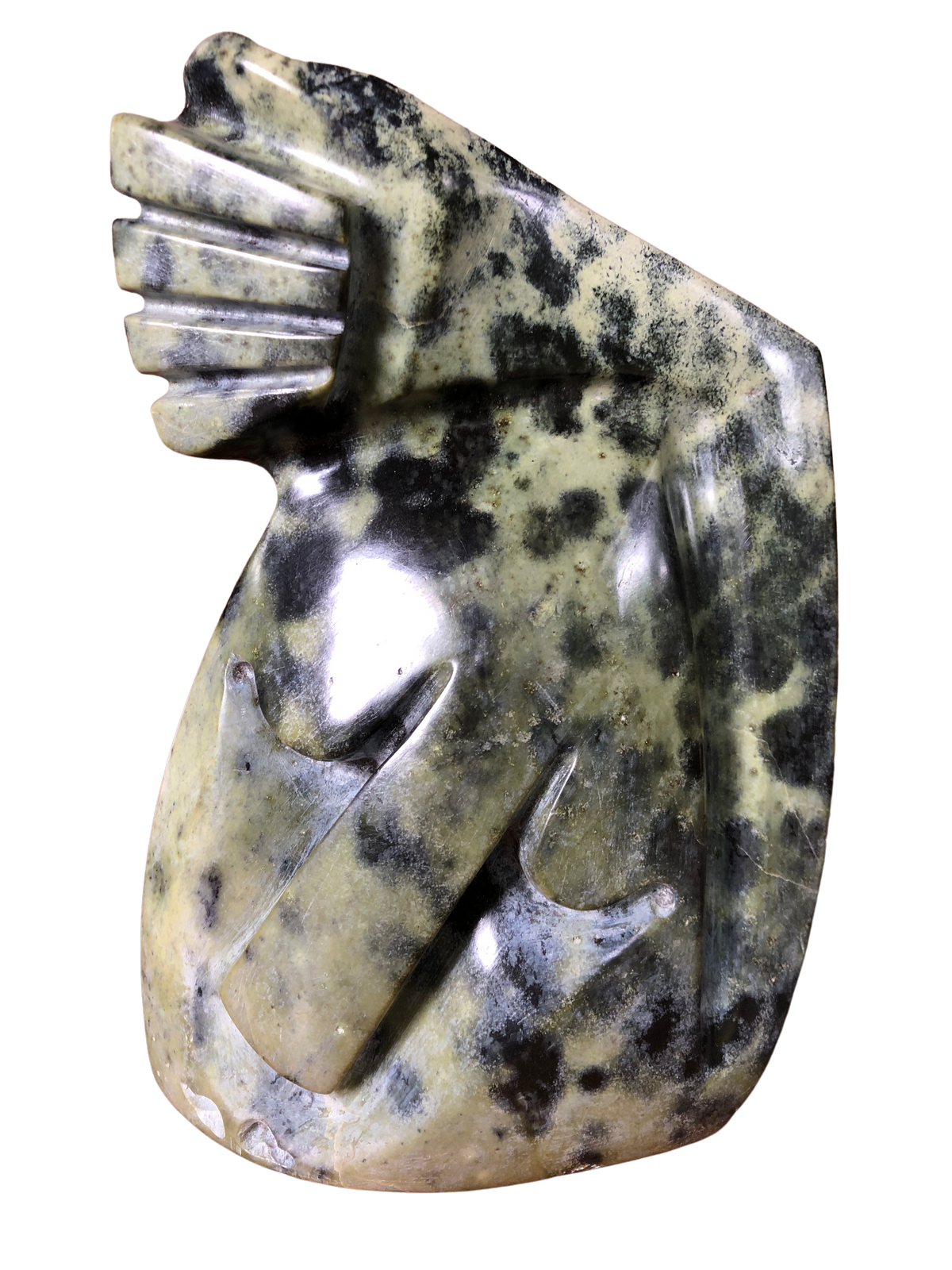
- Resembling a serpent’s skin, Serpentine offers a wide range of colors and patterns with no two pieces exactly alike. Its medium hardness (2.5-5.5 Mohs) allows artists to experiment and work deeper into the stone to reveal hidden mineral patterns, making it versatile for both abstract and figurative sculptures.
- Leopard Rock
- With deposits only found in Zimbabwe, Leopard Rock has a striking visual appearance with distinctive pockmarks, giving it a leopard like pattern. Both rare and unique, Leopard Rock is extremely delicate and mostly used for statement pieces that showcase the stone’s natural beauty, often with minimal carving.
- Verdite
- Verdite is a rare stone, green in color with striking golden streaks. Known as “Green Gold” it has become increasingly scarce, making new sculptures extremely rare and adding value to existing sculptures. Verdite is often carved into small, intricate pieces that highlight the stone’s natural patterns and rarity.
- Fruit Serpentine
- An artist’s favorite, each piece of Fruit Serpentine has a unique, multi-colored pattern, quite like a fingerprint. A harder variety than most Serpentine (4-5 Mohs), Fruit Serpentine allows artists to conduct more detailed work without the risk of chipping or shattering the stone. Once an artist uncover the stone’s natural color, they will often work the deep veins of varied strata into the variations of design.
Zimbabwe’s geological gifts have created a perfect environment for stone sculpture to flourish. From the ancient formations of the Great Dyke to the diverse array of stones available, each stone tells a story billions of years in the making, waiting a skilled hand to reveal its hidden beauty. This mineral legacy, locked in ancient stone, continues to inspire new generations of artists who transform geological history into enduring art.
 Michael Nyakusvora